




What happens beneath a road, drainage system, construction platform or groundworks project can be just as important as what we see on the surface.
In infrastructure and civil engineering projects, the performance of the ground layer can directly influence stability, drainage, separation, reinforcement and long-term project efficiency. This is why geotextile materials are widely considered in road construction, access-road projects, drainage systems, landscaping, construction platforms and other infrastructure applications.
YGM provides PP woven geotextile solutions for distributors, contractors, importers and project suppliers who need practical materials based on defined project and purchasing requirements.
For professional buyers, selecting geotextile is not simply about comparing GSM or price per square meter. The right approach should begin with the project application, required function, specification, roll dimensions, installation method and supply requirements.
What Is Geotextile?
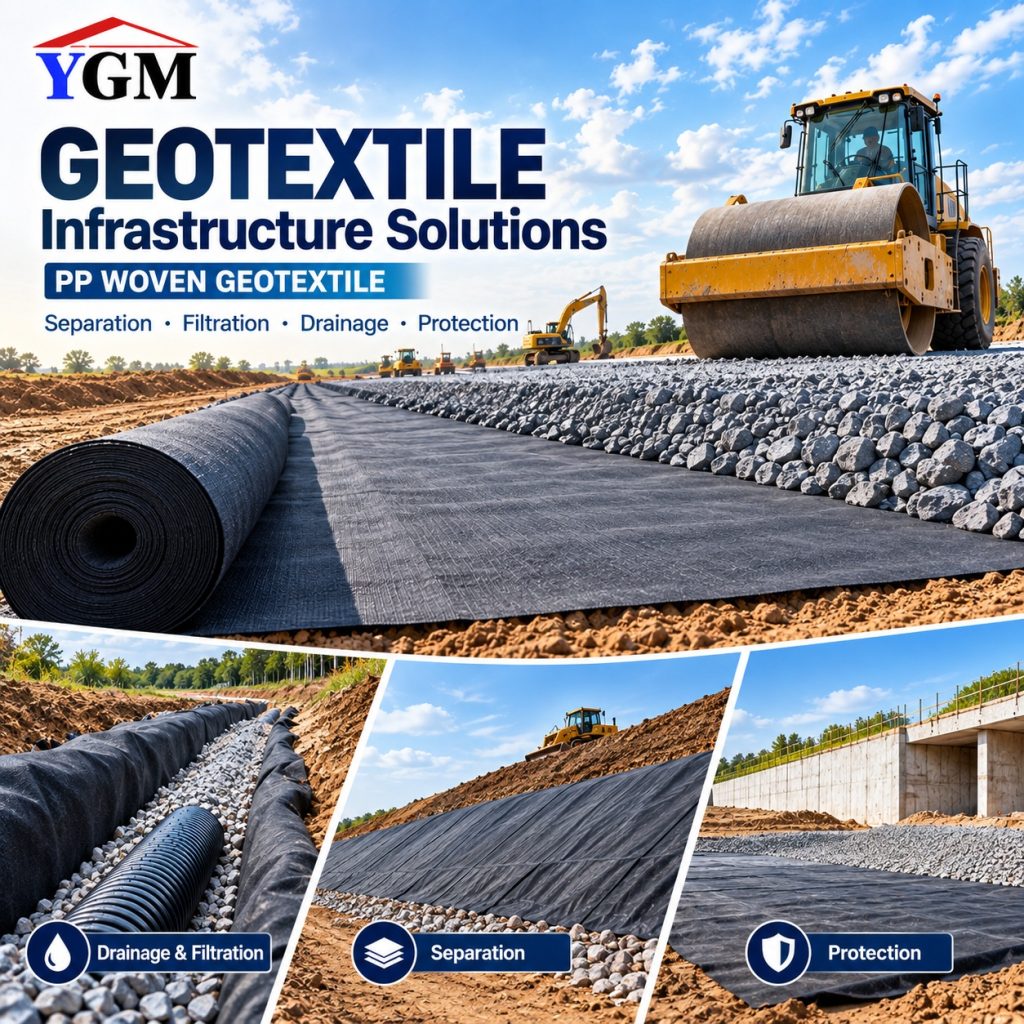
Geotextile is a type of technical fabric used in ground engineering, construction and infrastructure applications. Depending on the project design and material specification, geotextile can support functions such as separation, filtration, drainage, reinforcement and ground stabilization.
YGM PP woven geotextile is designed for practical infrastructure and construction-related applications where fabric strength, roll dimensions, handling and reliable supply are important for professional buyers.
Common application areas include:
- Road construction
- Access roads
- Ground separation
- Drainage and filtration systems
- Construction platforms
- Landscaping and groundworks
- Infrastructure projects
- Temporary site access
- Civil engineering applications
Why Geotextile Matters Beneath the Surface
Many infrastructure problems begin below the visible surface.
If soil layers mix, water cannot drain properly, or the ground structure is not suitable for the intended load, the surface layer may eventually face settlement, rutting, erosion or reduced performance.
Geotextile materials can help support better project performance by providing a designed layer between different ground materials.
Depending on the project requirement, geotextile can help:
- Separate different soil or aggregate layers
- Support drainage and filtration
- Reduce material mixing
- Improve ground stability
- Support road and access-road construction
- Improve installation efficiency
- Help maintain the designed structure of ground layers
This makes geotextile an important material for contractors, civil engineering suppliers and infrastructure product distributors.
1. Geotextile for Road and Access-Road Construction
Road construction and access-road projects often require materials that help manage ground conditions beneath the surface.
In many projects, geotextile is used between subgrade soil and aggregate layers to help reduce mixing and support more stable road construction.
YGM PP woven geotextile can be considered for:
- Temporary access roads
- Construction site roads
- Rural roads
- Industrial access roads
- Agricultural access routes
- Site preparation roads
- Road base separation
- Ground stabilization support
For road and access-road applications, buyers should consider the expected traffic type, ground condition, aggregate layer, installation method and required fabric strength.
A suitable geotextile can help improve the performance of the road structure and reduce the risk of early ground-layer problems.
2. Ground Separation Applications
Ground separation is one of the most common functions of geotextile materials.
In civil engineering and construction projects, different soil and aggregate layers may need to remain separated to maintain the designed structure. If these layers mix, the performance of the system may be reduced.
PP woven geotextile can help create a separation layer between:
- Soft subgrade and aggregate
- Soil and gravel
- Sand and stone
- Base materials and native ground
- Landscaping soil and drainage layers
- Construction platform materials
For professional buyers, ground separation performance should be selected according to the project design, soil conditions and expected load.
This is why the correct geotextile solution should be based on project requirements rather than price alone.
3. Drainage and Filtration Applications
Water management is a key part of many infrastructure and groundworks projects.
Geotextile materials can support drainage and filtration applications by allowing water movement while helping control soil particle migration, depending on the fabric structure and project design.
Applications may include:
- Drainage systems
- Subsurface drainage
- Retaining wall drainage
- Roadside drainage
- Landscaping drainage
- Groundwater management
- Filtration layers
- Civil engineering drainage projects
For drainage and filtration applications, buyers should consider permeability, opening size, soil type, installation environment and overall system design.
The goal is not simply to choose a high-GSM material. The geotextile must match the functional requirement of the drainage or filtration system.
4. Construction Platforms and Temporary Work Areas
Construction sites often require temporary platforms or stable working areas for equipment, materials and site movement.
Geotextile can be used as part of a ground preparation system to help support construction platforms and temporary work areas.
Typical applications include:
- Temporary construction platforms
- Equipment working areas
- Crane access areas
- Site storage zones
- Temporary roadways
- Material handling areas
- Construction staging areas
For these applications, strength, roll size and installation efficiency are especially important. The material must be practical for site handling and suitable for the project’s expected conditions.
YGM works with project suppliers and contractors to provide geotextile solutions based on defined specifications, roll dimensions and order requirements.
5. Landscaping and Groundworks
Geotextile is also widely used in landscaping and groundworks applications.
It can help separate soil layers, support drainage and reduce material movement in designed ground systems.
Common uses include:
- Landscaping projects
- Garden paths
- Ground preparation
- Drainage layers
- Retaining wall systems
- Gravel areas
- Erosion control support
- Soil separation
- Hardscape installation
For landscaping distributors and groundworks suppliers, geotextile products may need different roll dimensions, packaging formats and specifications based on local market demand.
Custom roll sizes and packaging can help improve market suitability and contractor convenience.
Start with the Project, Not Only the GSM
For professional buyers, one of the most common mistakes is selecting geotextile only by GSM or price per square meter.
GSM is important, but it is not the only factor that determines whether a geotextile is suitable for a project.
A better sourcing process should follow this logic:
Application → Required Function → Specification → Roll Dimensions → Installation → Supply
Application
First, define where the geotextile will be used. Road construction, drainage, ground separation and landscaping may require different product characteristics.
Required Function
Next, identify the main function. Is the geotextile needed for separation, filtration, drainage, reinforcement support or ground stabilization?
Specification
Select the material specification according to project design and performance requirements.
Roll Dimensions
Confirm roll width and roll length based on installation needs, logistics and market preferences.
Installation
Consider how the material will be transported, unrolled, overlapped, fixed and covered on site.
Supply
Evaluate whether the supplier can provide consistent production, packaging, shipment and repeat supply.
This process helps buyers choose a geotextile solution that matches real project needs.
Why PP Woven Geotextile Is Used in Infrastructure Projects
PP woven geotextile is made from polypropylene tapes or yarns woven into a stable fabric structure. It is commonly used in applications where strength, separation and ground support are important.
Depending on specification and project design, PP woven geotextile can offer:
- Good tensile strength
- Practical ground separation
- Stable woven structure
- Flexible roll dimensions
- Lightweight handling
- Efficient transportation
- Suitable performance for infrastructure applications
- Custom manufacturing options
For B2B buyers, PP woven geotextile can be an effective product category for road construction, groundworks, drainage and civil engineering supply channels.
Custom Geotextile Manufacturing for B2B Buyers
Different markets and projects require different geotextile configurations. A contractor may need wide rolls for efficient installation, while a distributor may need specific packaging and roll sizes for local customers.
YGM can support custom geotextile supply based on purchasing requirements, including:
- Fabric specification
- Roll width
- Roll length
- Product weight
- Packaging method
- Palletizing
- Labeling
- OEM requirements
- Private-label packaging
- Export packaging
- Repeat order supply
For importers and distributors, customization can help develop a more market-ready geotextile product range.
Who Can Use YGM Geotextile Solutions?
YGM PP woven geotextile solutions are suitable for a wide range of professional buyers, including:
- Geotextile distributors
- Construction material suppliers
- Civil engineering contractors
- Road construction suppliers
- Infrastructure project suppliers
- Importers
- Groundworks companies
- Landscaping product distributors
- OEM brands
- Project procurement companies
These buyers need more than a product quote. They need a manufacturing partner who can understand the application, specification, roll dimensions and supply requirements.
What Information Should Buyers Provide?
To recommend a suitable geotextile solution, buyers should provide clear project and purchasing details.
Important information includes:
- Application
- Required function
- Fabric specification
- GSM requirement, if available
- Roll width
- Roll length
- Quantity
- Packaging requirement
- Destination market
- Installation environment
- Expected project use
- OEM or private-label needs
With this information, YGM can discuss a more suitable PP woven geotextile solution for the buyer’s project or product range.
From Product Supply to Project Support
At YGM, geotextile supply is not only about selling rolls of fabric. It is about helping buyers develop materials that match actual project requirements and market needs.
YGM works with international customers through a practical process:
Application → Required Function → Specification → Roll Dimensions → Manufacturing → Packaging → Supply
This approach helps distributors, contractors, importers and project suppliers source geotextile materials more efficiently.
Frequently Asked Questions
What is PP woven geotextile used for?
PP woven geotextile can be used for road construction, access roads, ground separation, drainage and filtration applications, construction platforms, landscaping and other infrastructure projects.
Is geotextile only selected by GSM?
No. GSM is only one factor. Buyers should also consider the application, required function, tensile strength, permeability, roll dimensions, installation method and project requirements.
What is the difference between separation and filtration?
Separation helps prevent different soil or aggregate layers from mixing. Filtration allows water to pass while helping control soil particle movement, depending on the fabric and system design.
Can geotextile roll sizes be customized?
Yes. Roll width and roll length can be customized according to project requirements, installation needs and market demand.
Who buys geotextile products?
Typical buyers include distributors, contractors, importers, construction material suppliers, road construction suppliers, landscaping distributors and infrastructure project suppliers.
Can YGM provide OEM or private-label geotextile?
Yes. YGM can support OEM requirements, private-label packaging, customized roll dimensions, labeling and export packaging.
What information is needed for a quotation?
Buyers should provide the application, required function, specifications, roll dimensions, quantity, packaging requirements and destination market.
Geotextile Solutions for Infrastructure Applications
In infrastructure projects, what happens beneath the surface matters.
Roads, drainage systems, construction platforms and groundworks projects require materials selected according to their real function and installation conditions.
YGM PP woven geotextile solutions support applications such as road and access-road construction, ground separation, drainage and filtration, construction platforms, landscaping, groundworks and other infrastructure projects.
For professional buyers, the right geotextile solution starts with the project:
Application → Required Function → Specification → Roll Dimensions → Installation → Supply
Planning an infrastructure project or developing your geotextile product range?
Send YGM your application, specifications, roll dimensions and required quantity. Our team will help you discuss a suitable geotextile solution for your project or market.
Email: sales@ygmtarp.com